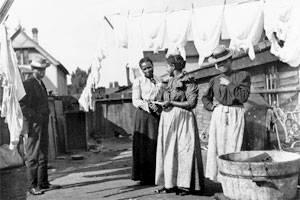
1900The "National Negro Business League" is establishedIn southern states many African Americans lived in poverty as sharecroppers who did not own their own land. African Americans were limited in their career opportunities because of inadequate education, racism, and white competition... |
 |
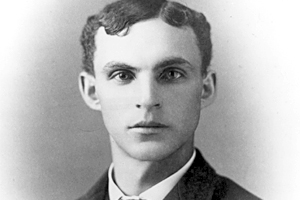
1903The Ford Motor Company is formedWith the assistance of 11 investors and $28,000 Henry Ford started the Ford Motor Company as the Vice President and chief engineer. The business started off very small, only able to produce three automobilesin a workday with only three workers on each vehicle... |
 |
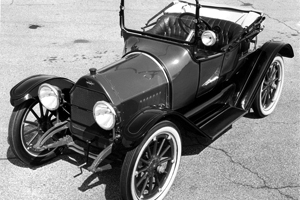
1908General Motors is formedWilliam Durant combined Buick, Olds, Cadillac, Elmore and Oakland to create what is now General Motors Incorporated. Durant offered different brands in order to target a broad market of incomes and preferences... |
 |
1913Ford's Moving Assembly LineHenry Ford realized he could sell more automobiles by producing them more efficiently. He developed a system of production that involved a moving assembly line on a conveyor belt around the building. On this assembly line, workers did not move to the automobiles; the automobiles came to them... |
 |
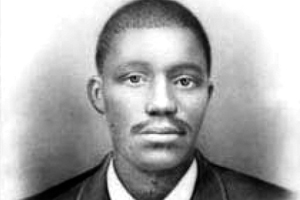
1914William Perry is the first salaried employee at Ford Motor CompanyWilliam Perry, the first known African American to work for Ford, started working at the Highland Park Plant in 1914. In the winter of 1888, Perry and Ford worked together, sharing a two-man saw on his timberland estate... |
 |
1914Five Dollars a DayThe work environment on the assembly line at Ford was tedious, repetitive and tiring. Because of these conditions, many employees did not last long at Ford. In order to slow the turnover rate, Ford introduced job incentives to his employees... |
 |
1915The Great Migration beginsSouthern life in 1915 was difficult for many African Americans |
 |
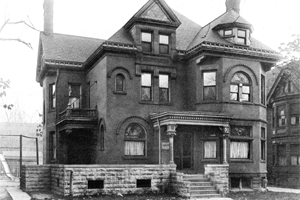
1916The Detroit Urban League formedForrester B. Washington and Henry G. Stevens opened the first Detroit Urban League office in 1916. John C. Dancy was appointed executive director after Washington and served for 42 years... |
 |
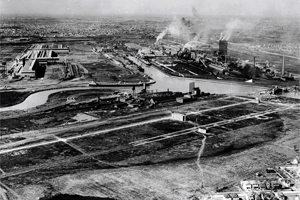
1917Ford's River Rouge Plant OpensIn 1917, Henry Ford purchased marshland in Dearborn, Michigan near the Rouge River for the site of the new Rouge plant. Architect Albert Kahn agreed to design the Rouge plant and the Eagle Boat Factory on the project site... |
 |
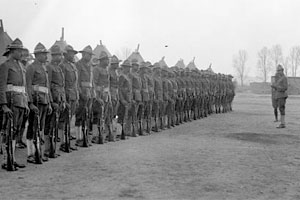
1917World War I beginsThe Great War, later named World War I, had been well under way in Europe since 1914, before the United States became involved on April 6th, 1917. Conflicts began with the assassination of Austro-Hungarian Archduke Franz Ferdinand, which caused tensions between Austro-Hungary and Serbia... |
 |
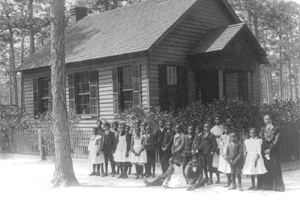
1919African American EducationAfrican American children who resided in the Metro Detroit area attended Wingert Elementary School. In the next three years they would come to represent a third of the school's population... |
 |
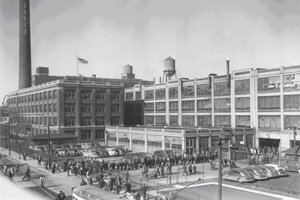
1920Dodge employs African AmericansBy 1920 many auto companies, with the exclusion of Henry Ford, still did not employ African Americans. John Dancy, the president of the Urban League, went to John Dodge and asked him to hire African Americans... |
 |
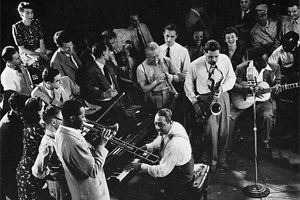
1922The Graystone Ballroom openedIn the 1920's ballrooms were a very popular form of recreation for young people in the city. As Paradise Valley emerged near Black Bottom, ballrooms became a very common place for people to go to during leisure times, where they could dance and listen to music... |
 |
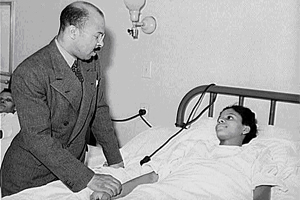
1924African American professionalsIn 1924, there were 80,000 African Americans living in the city of Detroit, double the population four years before. Groups like the Detroit Urban League worked hard to find jobs, housing and medical assistance for the newcomers... |
 |
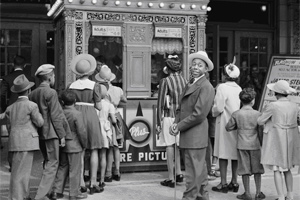
1926The 40-Hour WorkweekFord believed that a worker should be allowed leisure time just like the salaried employee above him. He argued time off was not time wasted because it encouraged the workers to do a better job when on the clock... |
 |
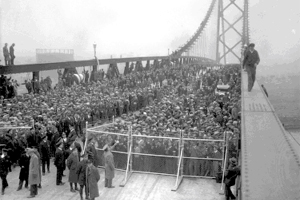
1929The Ambassador Bridge OpensThe commencement ceremony was held for the Ambassador Bridge on November 11th. Large crowds of 50,000 gathered on the Canadian side and possibly up to 100,000 on the American side. Sirens were sounded from factories and a plane dropped balloons over the center of the bridge... |
 |
1929Ford Employs African American Skilled Tradesmen and ManagementOne of the first automobile companies to hire African Americans and the first to offer an equal wage, Ford Motor Company continued to be one of the largest employers of African Americans... |
 |
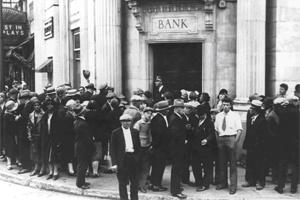
1929The Great DepressionIn 1929, 15 million Americans were out of the workforce and 45 million were unemployed. Approximately 60 percent of blacks were unemployed and had to seek welfare assistance in order to survive... |
 |
1932The Ford Hunger MarchThe Ford Hunger March, also known as the Battle at River Rouge took place on March 7 at the Ford Motor Company River Rouge Plant. 75 percent of the workforce at this plant had been laid off and without public relief people were dying of cold and hunger... |
 |
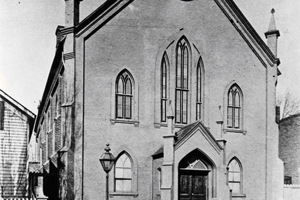
1933Second Baptist Church Raises Half a Million DollarsSSecond Baptist Church, between 1914 and 1933, raised and spent more than half a million dollars in serving the black community in Detroit. Founded in 1836, Second Baptist Church was and still is an active force... |
 |
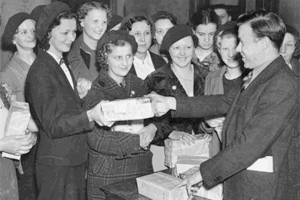
1935United Auto Workers FormedAugust 26, 1935, the American Federation of Labor (AFL) officially chartered the United Auto Workers (UAW) in Detroit, Michigan. Francis Dillon was its first president. The UAW was among one of few labor unions to organize African Americans... |
 |
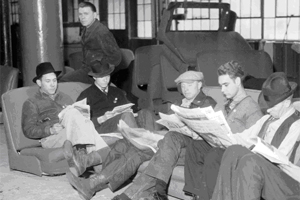
1936The Flint Sit-Down StrikeThe 1936 Flint Sit-Down strike took the UAW from a collection of isolated locals on the outside of the industry to a major union that led to the unionization of the domestic auto industry... |
 |
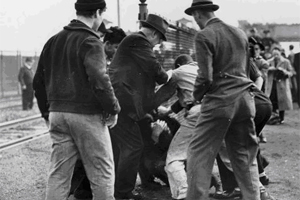
1937The Battle of the OverpassOn May 26, 1937, union organizers clashed with Ford Motor Company's Service Department; an internal security force under the direction of Harry Bennett. The UAW planned a leaflet campaign entitled, "Unionism, Not Fordism,"... |
 |
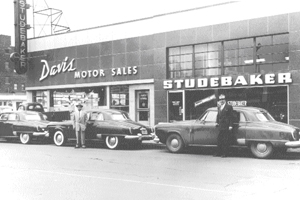
1939Davis Motor Sales OpensAt 16 years of age, Edward Davis began his career in Detroit's auto industry working first at a car garage and then a small car washing business. After graduating high school, he worked at Dodge, first in the foundry, and soon after in the machine... |
 |
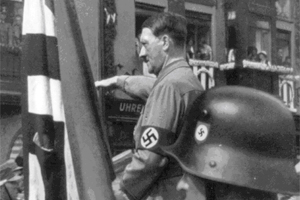
1939World War II beginsWorld War II (WWII) began on September 1, 1939 when German forces invaded Poland. Adolf Hitler's 'Blitzkrieg', or 'lighting war', consisted of unwarned air attacks that destroyed most of the Polish air force, bombing road, and rail... |
 |
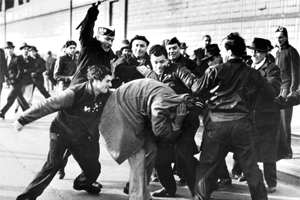
1941The River Rouge sit-down strikeIn April 1941, Ford remained the last major auto company that refused to recognize unions. When eight Ford employees were fired for joining the UAW, the entire labor force walked out on strike... |
 |
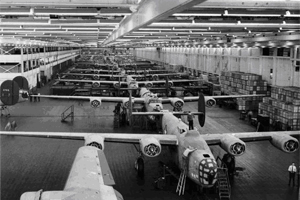
1942War Production BeganCar production in the United States came to a halt when America entered World War II. Ford Motor Company began building B-24 bombers and other war armaments on their assembly lines... |
 |
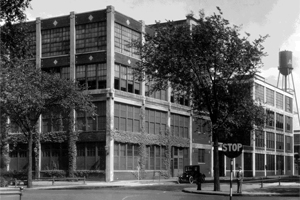
1943The Packard Motor Company strikeAlthough Packard Motor Company employed African Americans the plant was segregated and restricted black workers to the foundry or sanitation. In 1941 racial tensions became violent when Packard promoted black... |
 |
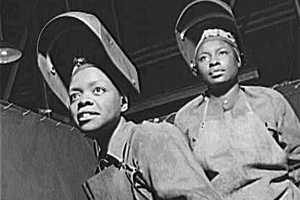
1944Women in the Auto IndustryThe United States' decision to enter World War II in 1941, created a labor shortage as hundreds of thousands of men were sent off to war. Jobs were again open to women for the first time since World War I... |
 |


